

The National Brain Appeal

Lucy Chisman-Russell

Lucy Chisman-Russell

Lucy Chisman-Russell

My Story

Hello everyone, and thank you for visiting to my fundraising page!

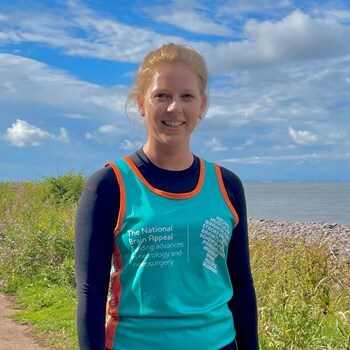
My love of sports began when I was very young. I was always out playing netball or football, going to trampolining and gymnastics classes and messing around with my friends in the local swimming pool. However, I never developed a love of running, so when I told my close family and friends about me running the London Marathon this year, they more or less laughed me out the door. I wanted to do something worthwhile to celebrate my 30th birthday this year, and I thought raising money for the National Brain Appeal, the charity I work closely with, would be the perfect way to do this.

I have worked at the Dementia Research Centre for nearly seven years now. Over that time, I have met some of the most inspirational individuals and families that are living with Dementia. They give up some of the precious time and energy that they have left, to enhance our knowledge of Dementia, to help find a cure and prevent others from having to experience what they are going through. We poke and we prod all the things that they find difficult to do, we take blood samples and brain scans and even ask them for spinal fluid, yet they come back year on year to help fight the cause.

I specifically work with individuals with a rare form of dementia known as Frontotemporal Dementia (also known as FTD) which affects individuals' behaviour and language. It is one of the most challenging dementia's for families to cope with and contributes to very high levels of caregiver burden due to these difficult and challenging symptoms that the individuals present with. Not only that, but FTD is also inherited, with around 30% of individuals having a genetic cause for their condition, and consequently, their children are at 50% risk of developing the illness in their lifetime. It is described as an early-onset dementia, affecting individuals from 40-65 years of age and at present, there are no treatments available to individuals with FTD, therefore it is a truly devastating and terminal diagnosis to receive.

However, there is some hope with the emergence of several clinical trials aiming to develop treatments for the disease, with around four different trials currently underway and many many more being designed. The National Brain Appeal helps with this cause, by funding researchers like myself, to help design the assessments and tools that are vital to designing clinical trials like this. Without these vigorous and careful assessments and the development of tests that can monitor the progression and changes in the illness, we would never know if the new drugs are working. You can find out more about my work and the work of my lab here or on Twitter @FTDTalk.

Further to this, the National Brain Appeal is also aiming to develop the first-ever patient support centre, specifically designed to help those individuals and family members who have been diagnosed with not only FTD but also other rare dementias as well. This is in collaboration with the Rare Dementia Support Charity - a truly worthwhile cause to prevent individuals with these rare dementias from feeling alone and isolated after such a terrible diagnosis. With the number of dementia causes continuing to rise year on year, with the cost to society ever-increasing, the support that a centre like this will be able to provide to families experiencing these rare dementia's will be life-changing. You can find out more about the development of the Rare Dementia Support Centre here.

I would like to take this opportunity to thank you for your time in reading this and am extremely grateful for any donations towards such a wonderful cause. Hopefully, we can make a difference to those suffering from Dementia, helping the individuals and their families to feel supported and less lonely at this extremely difficult time and I am confident, that one day, we will find a cure.

Much love and best wishes,

Lucy xxx
73%

Funded

  • Target
    £2,000
  • Raised so far
    £1,466
  • Number of donors
    48

My Story

Hello everyone, and thank you for visiting to my fundraising page!

My love of sports began when I was very young. I was always out playing netball or football, going to trampolining and gymnastics classes and messing around with my friends in the local swimming pool. However, I never developed a love of running, so when I told my close family and friends about me running the London Marathon this year, they more or less laughed me out the door. I wanted to do something worthwhile to celebrate my 30th birthday this year, and I thought raising money for the National Brain Appeal, the charity I work closely with, would be the perfect way to do this.

I have worked at the Dementia Research Centre for nearly seven years now. Over that time, I have met some of the most inspirational individuals and families that are living with Dementia. They give up some of the precious time and energy that they have left, to enhance our knowledge of Dementia, to help find a cure and prevent others from having to experience what they are going through. We poke and we prod all the things that they find difficult to do, we take blood samples and brain scans and even ask them for spinal fluid, yet they come back year on year to help fight the cause.

I specifically work with individuals with a rare form of dementia known as Frontotemporal Dementia (also known as FTD) which affects individuals' behaviour and language. It is one of the most challenging dementia's for families to cope with and contributes to very high levels of caregiver burden due to these difficult and challenging symptoms that the individuals present with. Not only that, but FTD is also inherited, with around 30% of individuals having a genetic cause for their condition, and consequently, their children are at 50% risk of developing the illness in their lifetime. It is described as an early-onset dementia, affecting individuals from 40-65 years of age and at present, there are no treatments available to individuals with FTD, therefore it is a truly devastating and terminal diagnosis to receive.

However, there is some hope with the emergence of several clinical trials aiming to develop treatments for the disease, with around four different trials currently underway and many many more being designed. The National Brain Appeal helps with this cause, by funding researchers like myself, to help design the assessments and tools that are vital to designing clinical trials like this. Without these vigorous and careful assessments and the development of tests that can monitor the progression and changes in the illness, we would never know if the new drugs are working. You can find out more about my work and the work of my lab here or on Twitter @FTDTalk.

Further to this, the National Brain Appeal is also aiming to develop the first-ever patient support centre, specifically designed to help those individuals and family members who have been diagnosed with not only FTD but also other rare dementias as well. This is in collaboration with the Rare Dementia Support Charity - a truly worthwhile cause to prevent individuals with these rare dementias from feeling alone and isolated after such a terrible diagnosis. With the number of dementia causes continuing to rise year on year, with the cost to society ever-increasing, the support that a centre like this will be able to provide to families experiencing these rare dementia's will be life-changing. You can find out more about the development of the Rare Dementia Support Centre here.

I would like to take this opportunity to thank you for your time in reading this and am extremely grateful for any donations towards such a wonderful cause. Hopefully, we can make a difference to those suffering from Dementia, helping the individuals and their families to feel supported and less lonely at this extremely difficult time and I am confident, that one day, we will find a cure.

Much love and best wishes,

Lucy xxx